From the first marble claddings to sustainable, Made-in-Italy furnishings. Gabriele Salvatori, CEO and Creative Director, recounts the brand’s evolution from a small workshop into a place for experimentation and innovation
Exploring marble from an unprecedented point of view. Shaping it as if it were soft and fluid. Experimenting with new techniques, all handcrafted and totally Made-in-Italy. Pursuing an ethical and sustainable approach. Since the 1980s, Salvatori has revolutionised design with natural stone, moving from simple machining to producing marble claddings and furnishings.
Salvatori marble for the award to the winning designers of the Archiproducts Design Awards
For the third consecutive year, Salvatori partners with the Archiproducts Design Awards to realise the trophy for the designers of the winning products – the Gris du Marais marble monolith designed by Michael Anastassiades. The object references the graphic language of the ADA award logo, giving life to a delicately balanced monolith – an austere solid that is, at the same time, light and airy.

The ADA 2022 award in the Gris du Marais finish
When the Archiproducts Design Awards team contacted us for the design and production of the designer trophy, we accepted the challenge with great enthusiasm and an awareness of the responsibility we were taking on. Each piece would end up in the hands of established and recognised design professionals.
We immediately thought of Michael Anastassiades for the project. With our tried-and-true team of Tuscan craftspeople, we set to work to create objects that the winners would truly appreciate.
Each piece, carved from a single block of marble, requires over four hours of work combining several numerically controlled machines and, of course, a good dose of skilful manual labour. The finishing alone demands over 40 minutes of care and attention – an original mix of design, technology, innovation and a thousand-year-old Italian craft tradition.
The history of Salvatori marble has its roots in post-WWII on the Tuscan coast in Versilia, a stone’s throw from the famous Carrara marble quarries. This is where Guido Salvatori founded the first workshop.
“In the beginning, the company was tiny, and it was difficult to make ends meet,” recounts Gabriele Salvatori, the third generation at the brand’s helm. “The real moment of initial growth only came years later when my father took over and decided to invest in research and innovation.
The first innovations came with stone-cutting machines and a new technique called ‘spaccatello’, which involved striking the block so that the weaker veins would give way to create surfaces with visible splits. It was an absolute novelty in a market dominated by polished finishes. It caught on and became a global success a few years later.
These are the roots of a company that has grown over time to become a genuine design brand. From that world, we inherited the desire to experiment and constantly innovate with obsessive attention to the end product, carefully crafted to the smallest detail. Respect for an ethical and transparent approach has also accompanied us over the years“.
Thus Salvatori marbles have spanned 70 years, offering ever-different interpretations of a timeless material.
Gabriele Salvatori, CEO and Creative Director, tells the Archiproducts editorial staff about the brand’s growth from a small workshop into a virtuous place of experimentation and innovation.
In the beginning, there were wall claddings and then came furniture and accessories. How did the transition from finishes to the furnishing sector come about?
We have taken a lateral approach to marble since the 1980s, moving beyond established canons. The exploration of associating natural materials, like wood or iron, with marble allowed us to gradually move out of the world of finishes.
The development of furniture collections is a natural projection of our vision of beauty and living. We sought a total look with furnishings integrated perfectly with the textures and nuances of our stone while maintaining a shared stylistic signature drawing on modernism.
We are proud of this perfect harmony between different elements and materials – a difficult balance to find, resulting from careful work in synergy with our designers.

Gabriele Salvatori in the Salvatori factories
Over the years, Salvatori has experimented with new products that combine marble, steel, wood and leather, like Spaghetti tapware and the Flirt chairs and table. How did the more recent projects come about?
Technological innovation and research into natural materials have been a constant over the decades. We have had the pleasure of working with big names in Italian and international design. They embody an aesthetic sense and an appreciation of raw materials, approaches that fit perfectly with our vision.
In that sense, we have long-standing collaborations. Elisa Ossino enthusiastically accepted our proposal to create an elegant and ultra-sleek faucet where marble merges with metal. It was a real challenge because we were pioneers in developing a product with a very slender 20 mm cartridge – the first on the market.
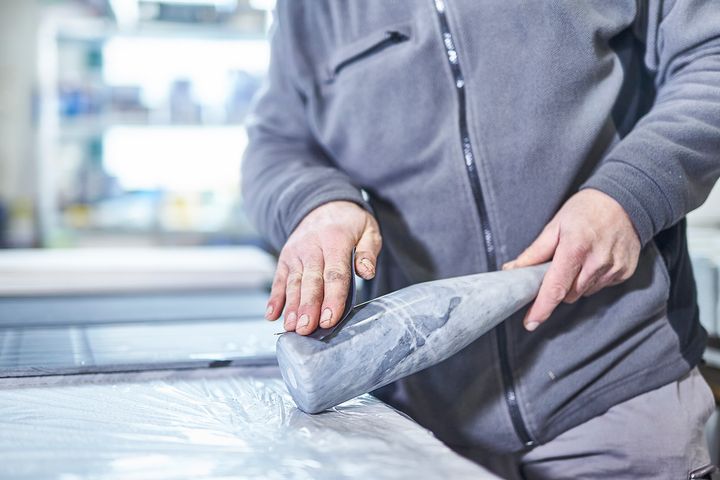
The craftsmanship of Salvatori marble
At the same time, we initiated new partnerships. With Luca Nichetto, we delved into a sector that had not been explored much by Salvator – leather. We produced some exceptional seating and a small table.
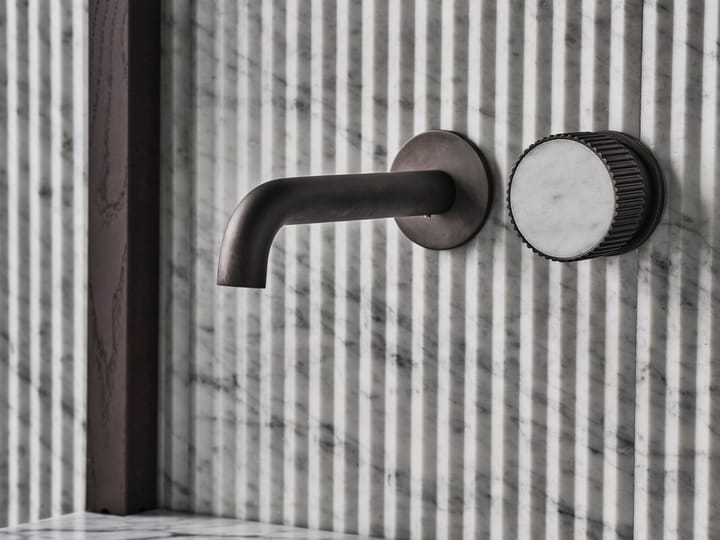
Spaghetti taps by Elisa Ossino
Salvatori’s proposals are born from the encounter between a precious material like marble and the creativity of architects. Indeed, numerous collaborations are also stories of friendship. Who was Salvatori’s very first designer? An anecdote from the early days?
In a way, I think I was the very first designer when I started experimenting with stone textures at the end of the 1990s, immediately launching the Bamboo collection. It is still produced today and is always one of the best-selling finishes, joined over time by the Dune collection, Lithoverde® and many others.
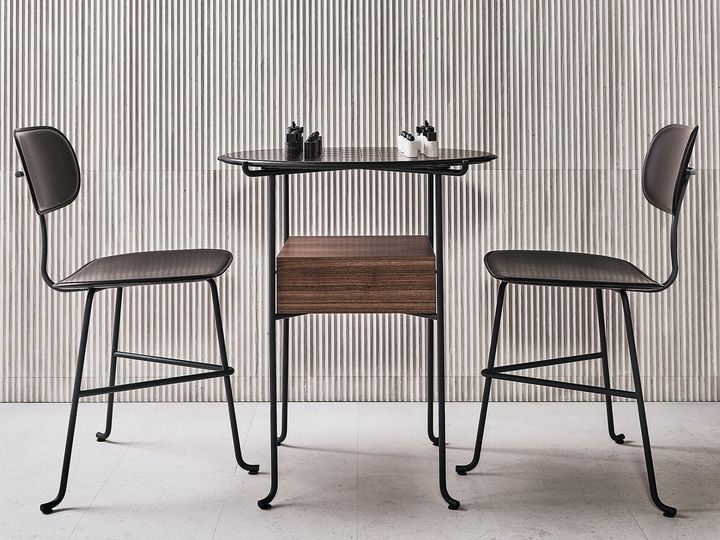
Flirt chairs and tables by Luca Nichetto
Regarding collaboration with external designers, the first name we turned to was John Pawson. It was professional ‘love at first sight’ for me in Hong Kong in the 1990s. I still remember being in the Cathay Pacific lounge at the airport – entranced by the attention to detail and beauty of a simple waiting room. I was convinced that it was the work of a Chinese architect. Upon my return to Italy, I discovered that it was a very famous design by John Pawson.
A few years later, when I told Gilda Bojardi about Lithoverde®, and she enthusiastically proposed presenting it at Fuorisalone 2010 by collaborating with one of the architects who would participate in the event, I couldn’t help but tell her that I wanted to collaborate with John at all costs. Gilda took me at my word and latched onto him like a hound. She didn’t give up until he agreed to start working on what would become one of the most iconic installations at Fuorisalone. The House of Stone was later published in many magazines and newspapers – two covers of El Croquis and Interni, a full page in Corriere della Sera and the front page of the New York Times Art section. But that was not the end of the story. That meeting gave life to an intense collaboration and an extraordinary friendship, for which John and I will never stop thanking Gilda.

Lithoverde tile
Who designed the latest collections?
Besides Elisa Ossino and Luca Nichetto, whom we have already mentioned, this year we have two beautiful additions to the Home Collection by Piero Lissoni. The first is Lighthouse, a small house with a heart of light that enriches The Village collection, a small multicultural village created after the lockdown period. Piero also created the Japanese Collection, a transposition of Japanese ceramic bowls into natural stone. He moulds the material in a surprising way – almost to the extreme.
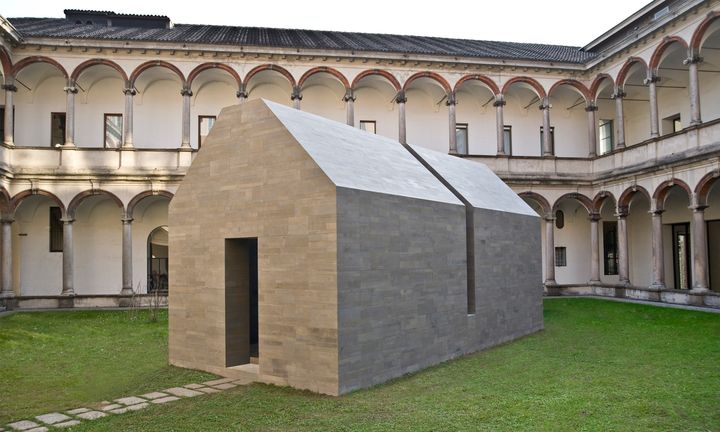
House of Stone by John Pawson
Again on the theme of lightness, John Pawson designed a truly unusual coffee table, Omphalos. Despite its vast dimensions, the table has a distinctive design that almost seems to float in the air.
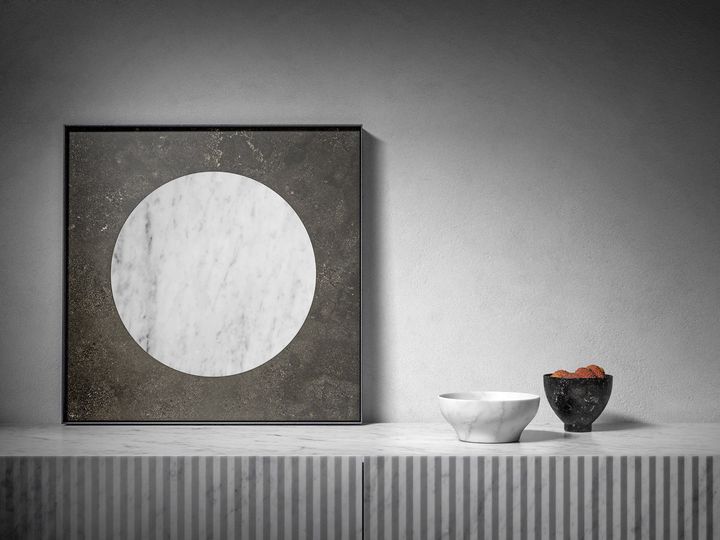
Japanese Collection by Piero Lissoni
Last but not least is the brand new Punto collection created by designers George Yabu and Glenn Pushelberg. This elegant modular bathroom collection is pragmatic in some ways, but at the same time, it’s fun with a powerful emotional impact.
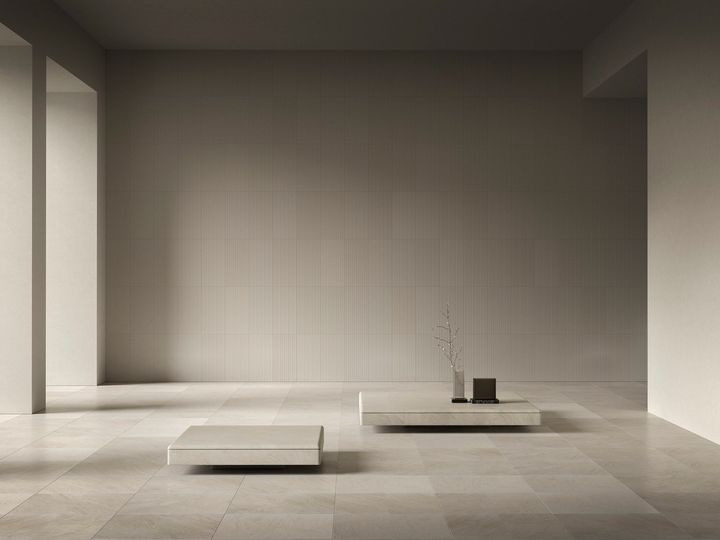
Omphalos low table by John Pawson
In September 2021, a new boutique in Via Palermo joined the historic space in Via Solferino. How do these spaces narrate the Salvatori world?
The Showroom and Boutique complement each other and show the brand’s two dimensions– the overall context on the one hand and the single accessory on the other.
If the Showroom presents a Total Look environment, allowing visitors to appreciate finishes and furnishings with matching complements under the proper lighting, the Boutique is a retail shop for our Home Collection products.
These spaces convey our idea of sincere, no-frills beauty, where the timeless lines of each of our products highlight the natural qualities of the materials, expressing the concept of unostentatious luxury.
From Lithoverde®, the world’s first recycled natural stone finish, to the Lost Stones project that recovers fragments of unused marble slabs. What is Salvatori’s approach to sustainability?
We started thinking about sustainability in 1975, well ahead of other companies. We began intervening in the production process with a water purifier for filtering water to limit the environmental impact of stone processing, recycling water and reducing the dispersion of the fine dust created during stone cutting.
We apply that same enthusiasm to the creation of our products. Where others see limitations, my team and I see possibilities. This spirit led us to patent Lithoverde® and launch Lost Stones. We know that the planet’s resources are limited and that design can lead the way in preserving them.
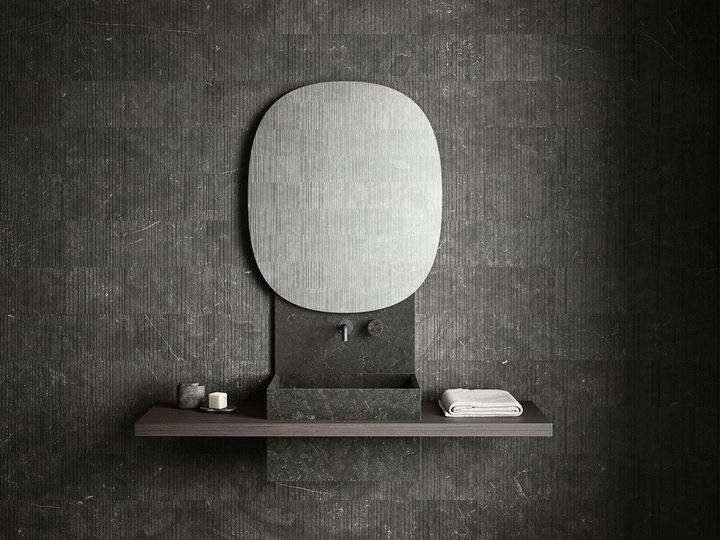
Punto bathroom collection by Yabu Pushelberg
In short, as we prove step by step, sustainability is an integral part of our business. We strive to improve daily, working on processes, products and packaging and set an example for the entire industry.
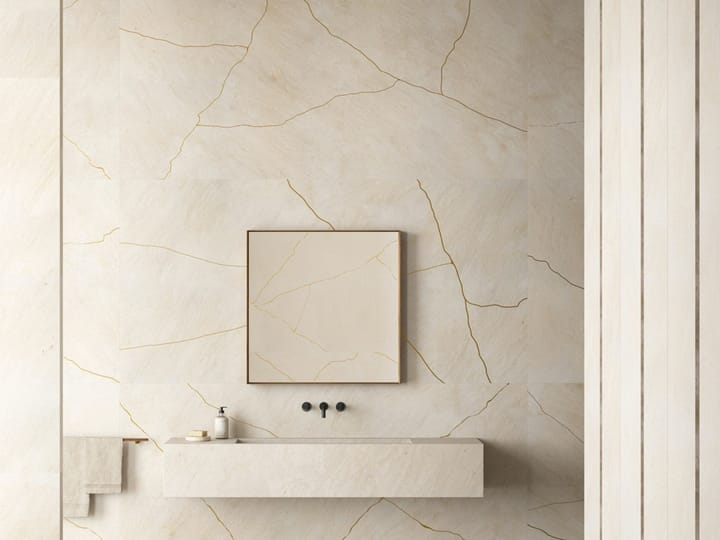
Lost Stones tile
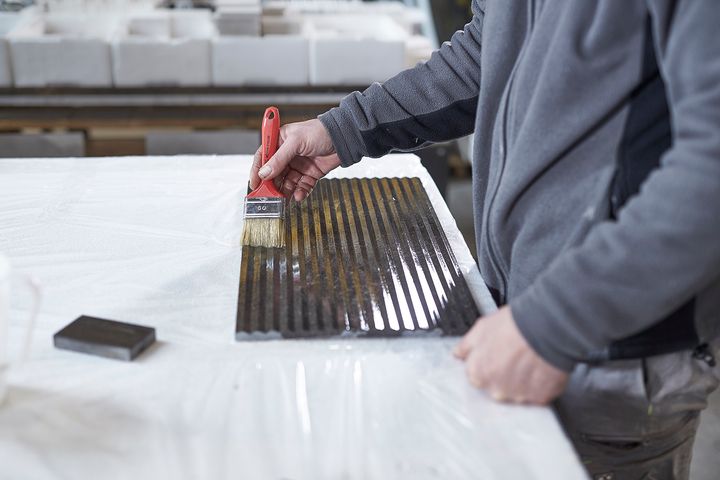
The craftsmanship of Salvatori marble
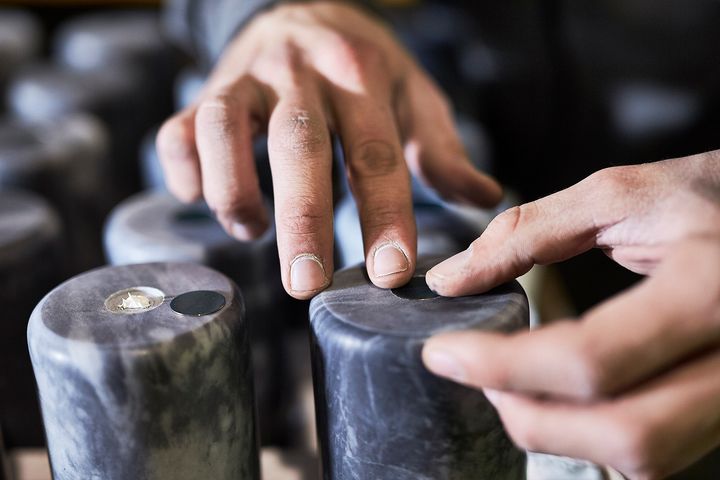
The craftsmanship of Salvatori marble
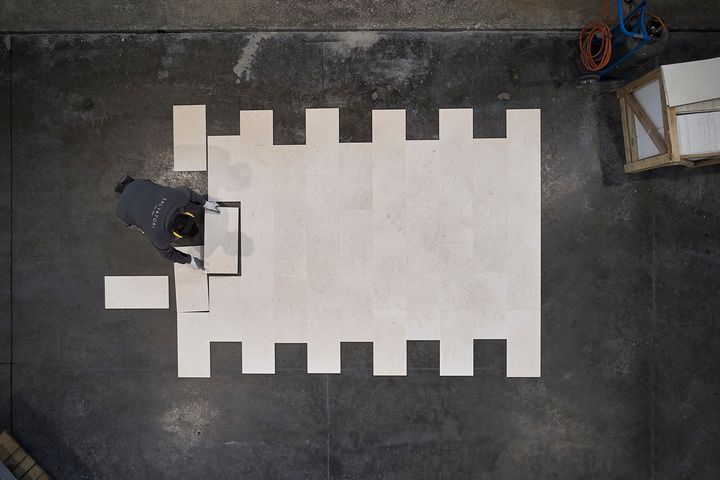
The craftsmanship of Salvatori marble